Is Cisco Business 220 the Right Managed PoE Switch for Growing Networks?
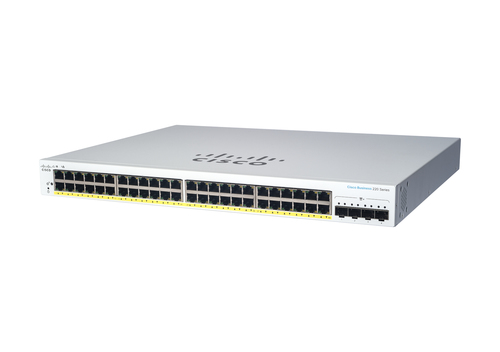
If your small office, school lab, or growing business needs steadier networking, does this switch solve the problem without making life harder? The Cisco Business 220 Series Smart Switches are managed L2 Gigabit Ethernet PoE options built for everyday IT needs. With 48 RJ-45 Gigabit ports, 104 Gbit/s switching capacity, an 8192 MAC address table, and a rack-mountable design, it supports business computers, servers, storage, GPUs, and education technology. See the exact model here: Cisco Business 220 Series Smart Switch product specs. For PoE-powered devices and office deployment, Cisco Business 220 PoE networking details helps. This post breaks down features, value, setup basics, and whether it’s worth buying for modern IT solutions.
What You’re Getting Under the Hood
Under the hood, the Cisco Business 220 Series keeps things practical. It’s a managed Layer 2 switch with 48 Gigabit Ethernet RJ-45 ports, PoE support, a 104 Gbit/s switching capacity, and an 8192 MAC address table. In plain English, that means it can move a lot of traffic, remember a lot of devices, and handle a growing office without feeling cramped. If you want the full capability breakdown, the Cisco Business 220 Series hardware overview is worth a look.
The standards list matters too: IEEE 802.1D, 802.1w, 802.1x, 802.3ab, 802.3ad, 802.3af, and 802.3at. That tells you it fits standard business networking environments, from simple VLAN setups to link aggregation and authenticated access. In my experience, many buyers ignore switching capacity until they hit a bottleneck. Then it suddenly matters a lot. Picture a department floor or training lab with workstations, printers, access points, and a few IP cameras. Port count and speed usually matter more than flashy extras. This Cisco Business 220 Series switch is built for that kind of day-to-day load, where steady performance beats headline-grabbing features every time.Why Managed L2 and PoE Make Everyday IT Easier
The real value here is simple: management control plus Power over Ethernet usually saves time and cuts clutter. A managed Layer 2 switch helps segment traffic, organize devices, and keep the network more predictable without dragging you into enterprise-level complexity. That’s a big deal when you just need things to work.
PoE is where the Cisco Business 220 Series becomes especially useful. It can power IP phones, access points, security cameras, and lightweight edge devices right from the switch, which means fewer adapters, fewer wall warts, and fewer support tickets. I’ve seen that small change make desks cleaner and troubleshooting easier. For more on PoE deployment, Cisco Business 220 PoE deployment options fits the conversation well. Schools, retail spaces, and compact offices often benefit the most. Education technology devices get cleaner installs, and office teams can move equipment around without hunting for power outlets. On the other hand, premium switches aren’t always worth it. Plenty of teams don’t need advanced features they’ll never touch—they just need dependable management, solid PoE, and a layout that won’t become a mess in six months.Where This Switch Fits Best in the Real World
This switch fits best where networks are growing faster than the old gear can handle. Small and mid-size offices, branch locations, school computer labs, conference rooms, and retail back offices are all natural homes for the Cisco Business 220 Series. The 48-port layout is especially helpful once you move beyond a few dozen endpoints and need a more organized rack. For fit-for-purpose details, the Cisco Business 220 Series for growing offices is a smart reference.
Here’s a common scenario: a company runs business computers, a file server, a couple of access points, and PoE cameras. Instead of scattering power bricks everywhere, it can consolidate data and power on one rack-mountable device. That usually means cleaner cable runs and easier support. I also think it makes procurement simpler in DHE MyShop-style environments, where budget, reliability, and fast deployment all matter. Compared with unmanaged switches, the Cisco Business 220 Series gives you visibility and control that growing networks usually need. Unmanaged models are simpler, sure, but once users, devices, and departments start multiplying, simplicity without management can turn into chaos pretty fast.Performance, Scalability, and What to Expect Over Time
The 104 Gbit/s switching capacity helps keep traffic moving when multiple devices are active at once. That matters when users are transferring large files, streaming lessons, backing up data, or hitting shared storage at the same time. In real life, consistency under load often matters more than peak numbers on a spec sheet.
The 8192 MAC address table is another quiet but important detail. It helps the switch recognize many connected devices, which is useful in dense offices, classrooms, and hybrid work spaces. Add link aggregation with IEEE 802.3ad, plus authentication and port security options, and you’ve got a more stable network foundation. For longer-term planning, Cisco Business 220 scalability and specs gives a helpful picture. Current market trends point the same way: more hybrid work, more PoE edge devices, more networked education technology, and more demand for simpler managed infrastructure. That said, this switch isn’t a replacement for a full enterprise core in very large deployments. It’s meant to scale sensibly, not magically solve everything.Honest Review: Strengths, Trade-Offs, and Who Should Buy It
My honest take? The Cisco Business 220 Series Smart Switch is a dependable workhorse. The pros are easy to see: strong port count, Gigabit speeds, PoE support, rack-mount readiness, managed L2 flexibility, and solid switching capacity for everyday business use. It feels like the kind of gear that quietly does its job well.
The trade-offs are just as real. It’s not the flashiest option for advanced enterprise routing needs, and some teams may pay for features they won’t fully use. Still, for offices, schools, and branch networks that care more about stability than complexity, it’s a very sensible fit. It also works nicely with business computers, storage appliances, and PoE endpoints. If you want control and room to grow, this is a smart middle ground. If you’ve only got a handful of devices, it may be more switch than you need. Premium options aren’t always the best value, especially when your requirements are modest.How to Set It Up Without the Headaches
Start with the basics. First, rack-mount the Cisco Business 220 Series in a ventilated network cabinet and plan your power and cable runs before you touch anything. Next, connect upstream internet or core network gear, then plug in business computers, servers, storage devices, access points, or PoE endpoints.
After that, log into the management interface, change the default credentials, and update firmware before going live. Then configure VLANs, port assignments, and PoE settings based on each device’s needs. I’d also label every port and keep a simple network map—trust me, that saves time later. Finally, test connectivity and monitor link status, power budgets, and traffic flow. Avoid the usual mistakes: overloading PoE power, skipping firmware updates, and forgetting to document changes. Pro Tips: stage changes after hours when possible so office users aren’t interrupted. A little planning goes a long way here.Conclusion
So, should you choose the Cisco Business 220 Series? If you need 48 Gigabit ports, managed L2 control, PoE support, rack-mount design, strong switching capacity, and broad standards support, it’s a very practical choice. It’s especially appealing for growing networks, education technology deployments, and offices tying together business computers, servers, storage, and PoE devices.
In my experience, the best switch is the one that makes the network easier to manage six months from now—not just the one that looks impressive on day one. That’s where this model shines: steady performance, sensible management, and room to expand without drowning you in complexity. If your environment needs dependable IT solutions without enterprise-heavy pricing or headaches, this is worth serious consideration. Review the product details and see whether the balance of performance and simplicity fits your setup: Cisco Business 220 Series Smart Switch product details.Frequently Asked Questions
Common questions about Cisco Business 220 Series Smart Switches Managed L2 Gigabit Ethernet (10/100/1000) Power over Ethernet (PoE) White